
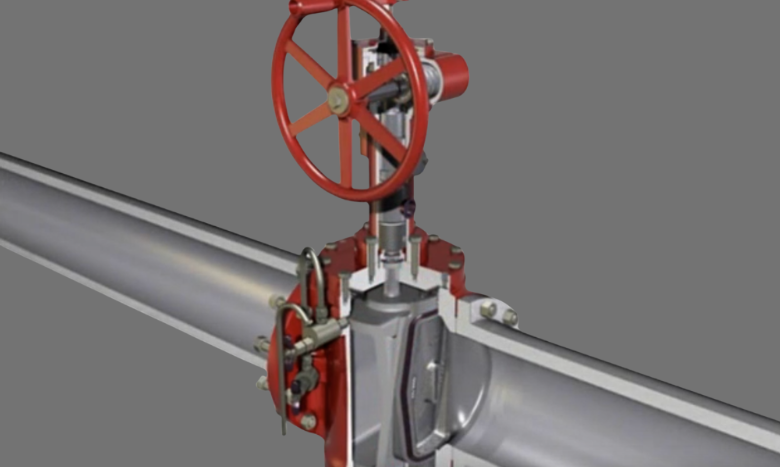
When operators in oil and gas, petrochemical, and pipeline applications need a valve that can deliver true zero-leakage isolation, the choice of design matters more than the size or pressure class on the spec sheet. The GENERAL VALVE Twin Seal, distributed by Energy Products Company, has been the benchmark for double block-and-bleed service since its introduction in 1941. But what actually sets the Twin Seal plug valve apart from traditional plug valves and the floating ball valves often substituted into the same service? The answer comes down to how the seals make contact with the valve body and what happens during the cycle.
The Problem with Traditional Plug and Ball Valves
Traditional plug valves rely on the rotation of a tapered or cylindrical plug across the seat. As the plug turns, the sealing surfaces drag against each other, generating friction. Over time, this sliding contact wears the seals, scores the plug, and creates the very leak paths the valve was installed to prevent. Operators end up replacing seals more often, scheduling more downtime, and living with isolation that degrades each cycle.
Floating ball valves face a different but equally serious problem in low-differential service like meter block applications. These valves depend on line pressure to push the floating ball against a downstream seat, energizing the seal. In meter block service, however, the differential pressure across each closed valve is very low, too low to compress the springs and seals reliably. A ball valve in this condition may be leaking quietly across the seat. When the operator opens the bleed to verify isolation, the resulting drop in body cavity pressure introduces a hydraulic force that can momentarily stop the leak, giving the false impression that the valve is holding tight when it is not.
That false sense of security is exactly the failure mode double block-and-bleed service is meant to eliminate.
How the Twin Seal Design Solves It
The Twin Seal takes a fundamentally different approach. Rather than relying on line pressure or springs, it uses a mechanical wedge action to drive both the upstream and downstream seals firmly against the valve body. The seals do not depend on differential pressure to energize, the geometry of the plug itself does the work. This means the valve seals just as tightly at low differential pressures as it does at high ones, eliminating the meter block leak-path problem entirely.
Equally important is what happens during the cycling motion. In a Twin Seal plug valve, the seals retract away from the body before the plug rotates. There is no sliding, no rubbing, no abrasion of the sealing surfaces against the valve port. The seals only make contact when the valve reaches the closed position, and at that point the wedge action compresses them mechanically. This retract-rotate-compress sequence is the core innovation that has kept the Twin Seal in service for more than eight decades.
Why It Matters in Real-World Service
The practical consequences are significant. Because the seals never rub during operation, they last dramatically longer than seals in traditional plug or ball valves cycled through the same service. Maintenance intervals stretch out, replacement parts inventories shrink, and unplanned downtime drops. Operators get a valve that delivers verifiable, repeatable isolation cycle after cycle, not isolation that depends on favorable pressure conditions or the operator’s interpretation of a bleed reading.
The Twin Seal also addresses a safety concern that has become increasingly important in pipeline and refinery operations. When a valve provides true double block-and-bleed isolation, downstream maintenance crews can work with confidence that no process fluid is migrating across the closed seats. With pressure-dependent valves, that confidence is conditional. With mechanical-wedge sealing, it is absolute.