
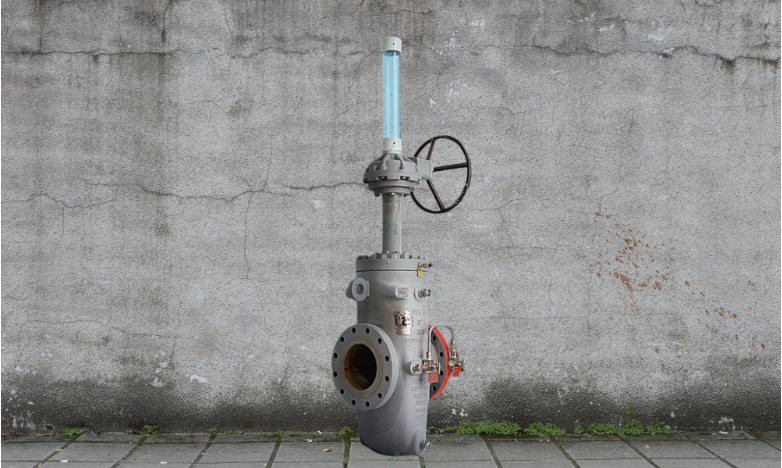
High-pressure service is unforgiving. A valve that works flawlessly at 150# can fail in expensive and dangerous ways at 900# or 1500# if its design does not match the application. Pressure class is the obvious starting point, but the ANSI rating on the nameplate is only the beginning of the conversation. Selecting the right high-pressure industrial valve requires more than simply matching ANSI pressure classes. The real question is whether the valve’s sealing principle, body construction, and operating mechanism are suited to the specific service conditions, pressure, temperature, media, cycling frequency, and isolation requirements. Energy Products Company, a Cameron valve distributor, stocks five distinct valve families because no single design is right for every high-pressure application. Here is how to think through the choice.
Start with the Service, Not the Valve
The most common mistake in valve selection is starting with a familiar product type and forcing the application to fit. Better practice is to define the service first. Ask: What is the maximum operating pressure, and what are the upset conditions? What is the temperature range, including thermal cycling? Is the medium clean, particulate-laden, corrosive, or sour? How often will the valve cycle? And, critically, what level of isolation does the application demand? “Tight shutoff” means different things in instrument air service and in a hydrocarbon meter block.
Once those answers are clear, the valve type that fits will usually narrow itself.
Match the Sealing Principle to the Pressure Profile
In high-pressure service, the sealing principle matters more than the pressure rating. Floating ball valves rely on line pressure to push the ball into the downstream seat. That works well in steady high-differential service but fails at low differential, the seat is not energized, and the valve can leak silently. For meter block and double block-and-bleed isolation, a mechanically energized design is the better choice. The GENERAL VALVE Twin Seal plug valve uses a wedge action to compress both upstream and downstream seals firmly against the body, independent of line pressure. Energy Products stocks the Twin Seal in 2″ through 36″, ANSI 150# through 900#, for exactly this reason.
For high-pressure isolation in critical or thermally cycling services, a rising stem ball valve like the ORBIT delivers a different advantage. Its tilt-and-turn motion lifts the ball off the seat before rotation, eliminating the seat rubbing that scores conventional ball valves. Stocked in 2″ through 12″ up to ANSI 900# (with higher classes available on request), the ORBIT is the proven choice for high-temperature critical isolation and molecular sieve switching service.
Consider the Flow Path and Pigging Requirements
Pipeline and transmission service often demands full-bore flow with the ability to pass pigs and scrapers. This favors through-conduit gate designs. The WKM Pow-R-Seal expanding gate valve and the WKM SAF-T-SEAL slab gate valve both deliver full-bore flow with tight mechanical sealing, and both are stocked in 2″ through 36″, ANSI 150# through 900#. The Pow-R-Seal’s expanding gate provides positive mechanical sealing in both directions, while the SAF-T-SEAL slab gate offers a simpler, robust solution where mechanical expansion is not required. Both feature the SLS stem seal packing, which is fugitive-emissions tested and self-adjusting, important for high-pressure service where stem leakage is a meaningful risk.
For specialty switching applications at moderate-to-high pressure, the GENERAL VALVE Four-Way Diverter (stocked in 3″ through 16″, ANSI 150# through 600#) provides positive sealing without dependence on line pressure, with retracting slips that prevent the seal abrasion that would otherwise limit cycle life.
Don’t Overlook Trim, Materials, and Standards
ANSI class sets the pressure-temperature envelope, but trim selection determines how the valve performs within it. NACE-compliant trims are essential for sour service. Low-alloy versus stainless body materials affect both pressure rating and corrosion resistance. For emissions-sensitive applications, certifications like ISO 15848 Tightness Class AH and API Standard 622, which the ORBIT Low-E valves carry, are worth specifying explicitly rather than assumed. Fire-test certification to API 6FA matters in any service where external fire is a credible risk.
Talk to a Specialist
Selecting a valve from a catalog is straightforward. Selecting the right valve for a demanding high-pressure service is not. Energy Products Company keeps stock available today across all five product families and across the full range of pressure classes most operators need. The best high-pressure industrial valve for your application depends on pressure profile, media, cycling frequency, and required isolation performance. A short conversation with the sales team, (724) 942-1000 or sales@energyproducts.com, can save weeks of delivery time and prevent the kind of mismatched specification that causes problems years after the valve is installed.