
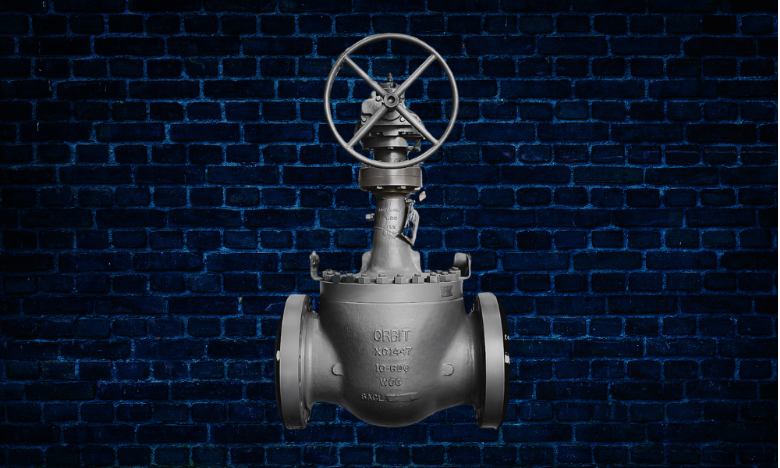
In high-temperature process service, the difference between a valve that lasts and a valve that fails usually comes down to one issue: what happens to the seats and seals every time the valve cycles. Thermal expansion, dynamic stress, and aggressive process media all conspire against conventional ball and gate designs. The ORBIT rising stem ball valve, distributed by Energy Products Company, was engineered specifically to function as a reliable high-temperature isolation valve in severe process conditions, and the design principle behind it has been proving itself in the field for nearly 90 years.
The Problem with Conventional Ball Valves at High Temperature
A conventional floating or trunnion-mounted ball valve closes by rotating the ball a quarter-turn while it remains in continuous contact with its seats. That contact is the source of nearly every high-temperature failure mode. As the ball rotates against the seat, the sealing surfaces rub. At ambient temperature with clean media this is manageable, but introduce thermal cycling, particulate-laden flow, or high process temperatures and the seats begin to score. Once a seat is scored, leak paths form, and no amount of additional torque will reseal the valve. Operators are then forced into unscheduled maintenance, often in services where shutdown is enormously expensive.
Thermal expansion compounds the problem. As metal components grow and contract with temperature swings, the interference fit between ball and seat changes. Conventional designs either bind under thermal load or relax enough to leak. Either outcome is a problem in critical isolation service.
The Tilt-and-Turn Solution
The ORBIT valve takes a fundamentally different approach. Rather than dragging the ball across the seat, it uses a tilt-and-turn motion driven by the rising stem. When the operator turns the handwheel or actuator, the ball first tilts away from the downstream seat, breaking all contact between the sealing surfaces. Only then does the ball rotate to the open or closed position. On closing, the sequence reverses: the ball rotates into position with no contact, then mechanically wedges into the seat to form the seal.
The result is that the sealing surfaces never rub during the cycling motion. There is no abrasion, no scoring, no progressive wear of the seat, and therefore no progressive degradation of isolation integrity. This is the engineering principle Alfred Heggem patented in 1935, and it remains the reason the ORBIT rising stem ball valve is world-renowned for high integrity and long service life nearly nine decades later.
Why It Works in Harsh Conditions
For high-temperature applications, the tilt-and-turn motion delivers several specific advantages. Because the seats see no rubbing, particulate carried in the process stream cannot grind sealing surfaces during cycling. Because the ball mechanically wedges into the seat at closure rather than relying on differential pressure or spring loading, the seal holds tight even when thermal expansion shifts the geometry of the valve body. And because the stem rises rather than rotating in place, the stem packing experiences far less wear than in quarter-turn designs, a meaningful benefit when packing is exposed to high process temperatures.
These properties are why ORBIT valves are the proven choice for some of the most demanding services in the industry, including molecular sieve switching, where valves cycle continuously between hot regeneration gas and cold process gas. Few applications punish a valve more aggressively than molecular sieve service, and few applications make the case for tilt-and-turn sealing more clearly.
Low-E Performance at Temperature Extremes
Energy Products also stocks ORBIT Low-E valves, which integrate advanced graphite-based sealing elements into the proven tilt-and-turn operation. These valves are certified to ISO 15848 Tightness Class AH and API Standard 622 for both high- and low-temperature applications, setting a benchmark for fugitive emissions performance under temperature extremes. For operators facing tightening emissions regulations, the Low-E option delivers compliance without sacrificing the cycle life that makes ORBIT valves the standard for harsh service.
Stocked and Ready
Energy Products Company maintains stock of ORBIT rising stem ball valves in sizes from 2 inches through 12 inches, ANSI 150# through 900#, with T3, T5, and T7 trim options and H and H8 seat configurations to match the specific demands of your process. Larger sizes and specialized trims are available on request.
When isolation has to hold through thermal cycles, abrasive media, and continuous switching duty, the design that wins is the one that keeps its seats out of contact during the cycle. That is the ORBIT advantage, and it is why these valves continue to define the standard for high-temperature isolation.